

The rise of patient-reported outcomes (PROs) as a metric for success in clinical trials
In a world with over eight billion people and thousands of cultures, our daily lives differ greatly – and yet there are fundamental similarities between all people, such as how we deal with challenges and strokes of fate.
World Cancer Day is an annual event organized by the Union for International Cancer Control (UICC) to raise awareness for cancer and its detection, treatment and prevention. This year’s motto is “United by Unique”, highlighting the unique experiences of all individual patients with cancer, who are nonetheless united in the challenges their illness poses. Furthermore, cancer is possibly the most diverse disease entity one can imagine, with its potential to arise from almost any cell in the body and a multitude of molecular drivers and markers shaping its progression.
We are using this year’s World Cancer Day as an opportunity to launch a short series of articles highlighting various topics related to the diversity of cancer and the individual experiences and needs of patients with cancer.
The rise of patient-reported outcomes (PROs) as a metric for success in clinical trials
The fundamental goal of clinical trials in oncology is to develop drugs that are safe and effectively address patients’ key symptoms, prolong survival, and improve overall well-being. Clinical trials are primarily based on objective metrics such as tumor size or survival rates, which help generate robust data on a drug’s efficacy. However, some data are much harder to collect than the 5-year survival rate, yet they are nevertheless crucial. Beyond complex data and biomarkers, it is essential to consider how patients experience medical interventions and how these experiences affect their lives if medical research is to place patients’ interests at the center of its mission.
“How are we doing today?” is probably one of the most frequently asked questions in hospitals, but this personal approach was not systematically incorporated into clinical studies in the past. To bridge the gap between complex data and empathetic patient care, the importance of patient-reported outcomes (PROs) and quality-of-life (QoL) data in clinical trials has been increasingly recognized.
What are PROs?
Generally speaking, PROs are reports of a patient’s health status that come directly from the patient. These can include disease-related symptoms, bodily functions, health-related QoL, and general satisfaction with treatment. QoL encompasses a patient’s physical, psychological, and social well-being.
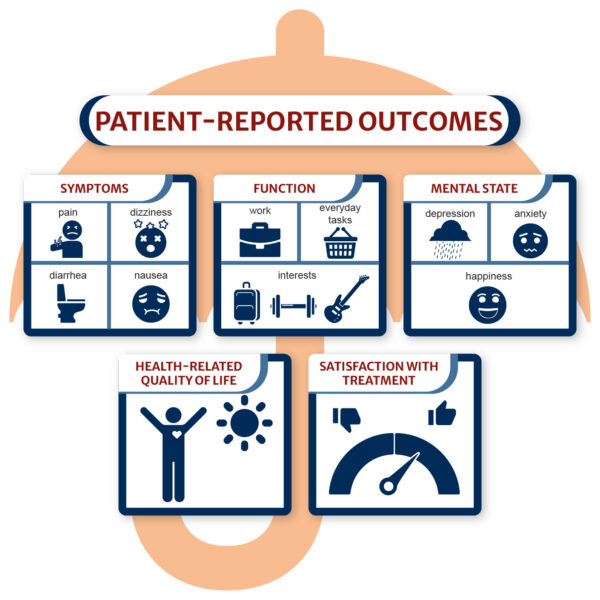
Figure 1: An overview of different categories of patient-reported outcomes (PROs).
In oncology, for example, PROs are being used to evaluate the impact of cancer treatments on patient symptoms, function, and overall well-being. For pretreated patients and those in later stages of disease, weighing the side effects against the effectiveness of the treatment is particularly important. PROs and QoL data can help identify potential side effects and other issues that may arise during treatment, especially those that do not manifest on bloodwork or physical examinations. For study participants, this also means more time and effort are devoted to considering their perspective. A US study among patients with multiple myeloma (MM), an incurable cancer of the bone marrow, found that after progression-free survival (PFS), QoL and independence are the most important factors for patients and their families. [1] A pan-European study of patients with MM revealed a similar pattern: life expectancy was a top priority, followed by QoL and independence, including mobility, pain, vision, and mental health. [2]
Questionnaires for the assessment of PROs
In clinical trials, QoL for patients with cancer and satisfaction with treatment are assessed using questionnaires like EORTC QLQ-C30 and QLQ-PATSAT-C33 (by the European Organisation for Research and Treatment of Cancer (EORTC)). Other questionnaires focus on QoL among patients with specific cancers or those undergoing particular treatments. In addition, questionnaires related to mental health or sexual wellbeing may be used if appropriate. [3]
PROs have entered into international guidelines
The FDA and EMA strongly encourage sponsors of clinical trials to include PROs and QoL data in their submissions. This helps ensure that new treatments are evaluated not only for clinical efficacy but also for their impact on patients’ everyday lives. [4,5]
The World Cancer Day campaign 2025-2027 aims to achieve people-centered care in oncology. PROs and QoL data are crucial to this endeavor, as they provide valuable insights into the patient experience and inform treatment, regulatory, and healthcare policy decisions. As such, they will continue to play an essential role in improving patient outcomes and elevating overall healthcare quality in oncology.
References
- Dwyer Orr L, Lin D, Wu B, et al. Patient, Care Partner, and Physician Voices in Treatment Decision-Making for Multiple Myeloma. Patient Prefer Adherence 2024;Volume 18:2147–58. https://doi.org/10.2147/ppa.s474722.
- Janssens R, Lang T, Vallejo A, et al. What matters most to patients with multiple myeloma? A Pan-European patient preference study. Front Oncol 2022;12. https://doi.org/10.3389/fonc.2022.1027353.
- European Organisation for Research and Treatment of Cancer. List of questionnaires. Questionnaires 2026. https://qol.eortc.org/questionnaires/.
- Federal Drug Administration. Core Patient-Reported Outcomes in Cancer Clinical Trials Guidance for Industry 2024. https://www.fda.gov/media/149994/download.
- European Medicines Agency. Appendix 2 to the guideline on the evaluation of anticancer medicinal products in man 2016. https://www.ema.europa.eu/en/documents/other/appendix-2-guideline-evaluation-anticancer-medicinal-products-man_en.pdf.
© 2026 Springer-Verlag GmbH, Impressum